Salvaging a Long-Submerged Hamble Wreck
Sunken Boat Removal from Hamble River
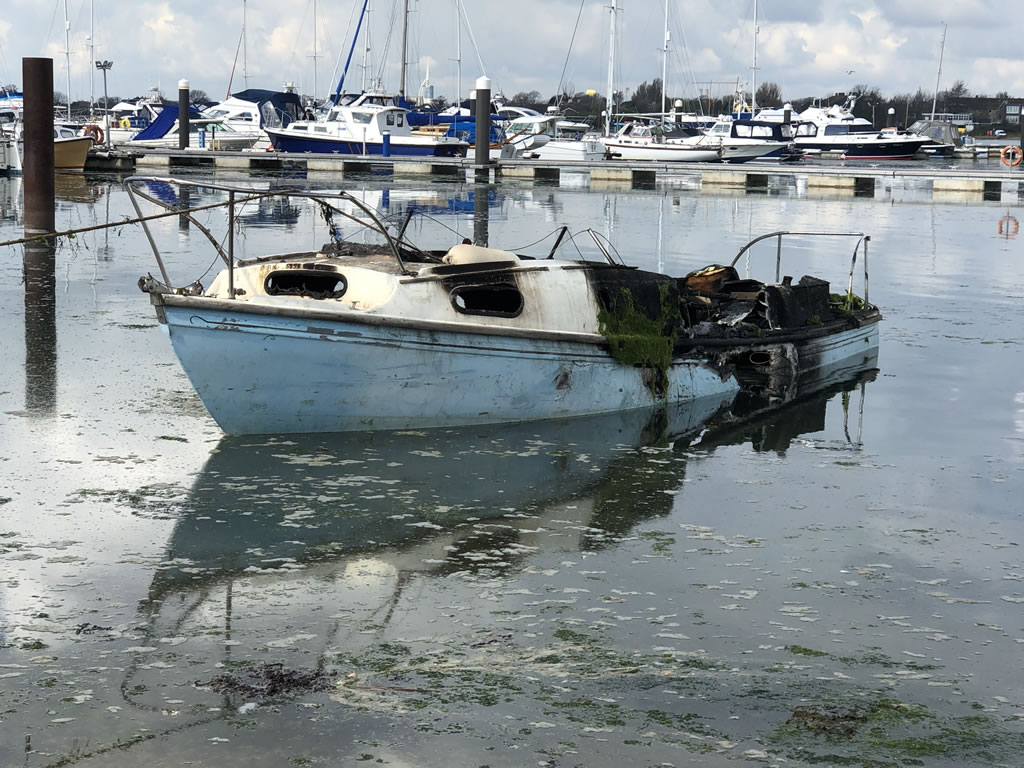
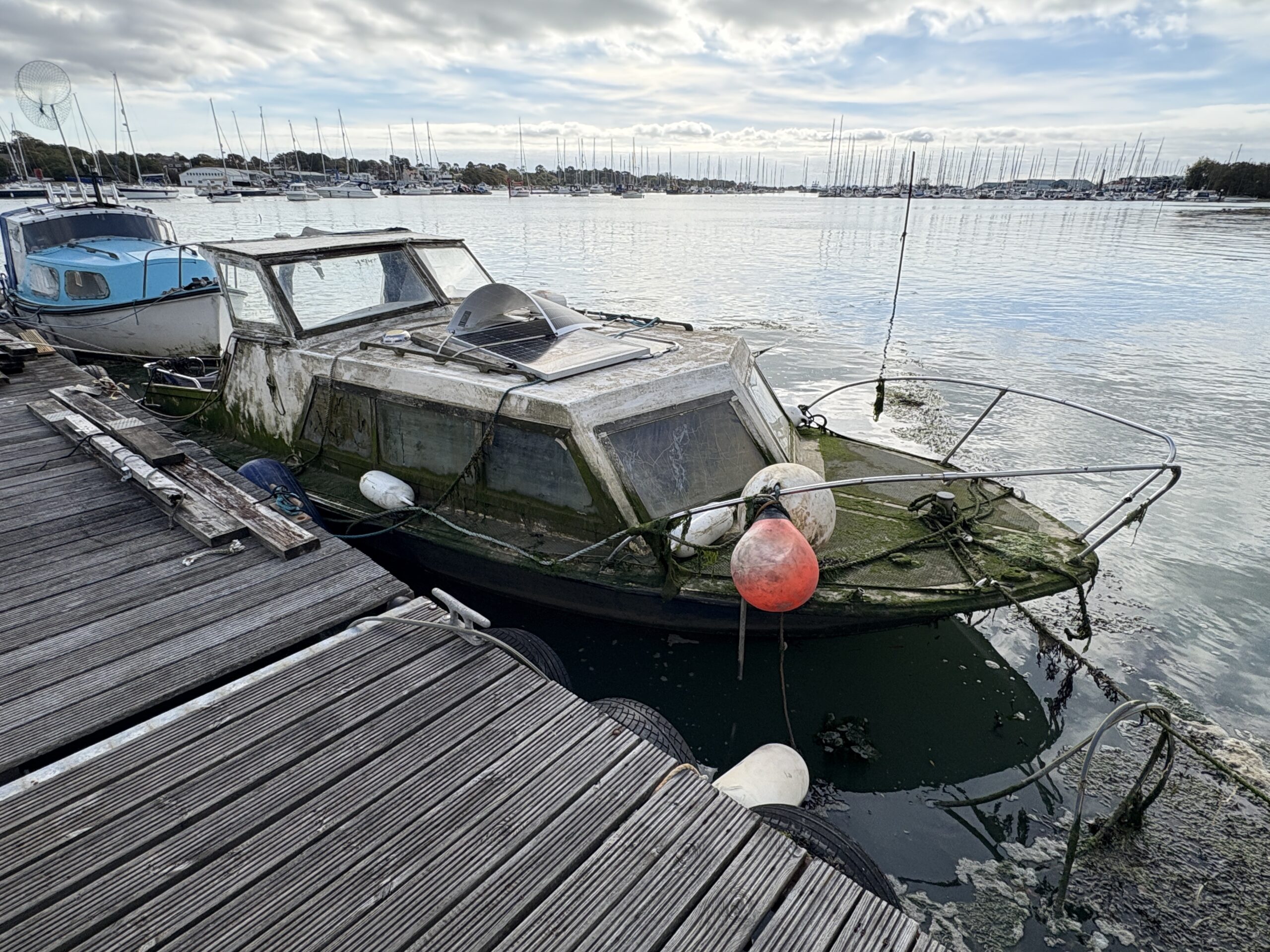
The call came in from a bustling yard on the Hamble River regarding a challenging recovery. A motorboat that had succumbed to the river and sunk on its pontoon mooring. After spending some months partially submerged and sinking on every high tide, the vessel was finally raised by the diligent yard team. Our job at Boatbreakers was to take over the salvage operation and ensure its final journey was safe and efficient.
Once re-floated by the Pink Ferry team, the waterlogged hull was towed from its mooring to the nearest accessible marina. This transit was executed slowly and cautiously, ensuring the vessel remained stable after its long immersion. Upon arrival, the boat was met by our transport team.
Blast Off
The marina’s travel hoist was brought into action, lifting the heavy, saturated vessel clear of the water and revealing the extent of its immersion damage. Once secured ashore, our crew set about positioning the large recovery truck. The sodden hull was then blasted off and loaded onto our low-loader truck.
The journey concluded at our dedicated Boat Scrapyard facility, where the dismantling process began. Inspection revealed the true cost of months spent sinking on every high tide. The interior was heavily contaminated and ruined; cushions, electronics, and fittings were beyond salvage due to prolonged exposure to silt and water. Very little was worth saving from the boat’s interior.
The recovery was, however, worthwhile for its basic components. The vast majority of the boat’s value lay in the raw metals. The engine block, propeller, shafts, and other metallic components which were stripped, separated, and prepared for recycling. A tough ending for the boat, but a clean, responsible resolution handled by the Boatbreakers team.Removing a sunken wreck, such as the boat salvaged from the Hamble River, yields significant environmental positives.
Environmental Benefits
Firstly, the immediate threat of fuel and oil pollution is eliminated. Even after partial re-floating, tanks, bilges, and engine components in a submerged vessel can leak hydrocarbons and heavy metals into the waterway. Posing a direct toxicity risk to marine life, birds, and surrounding marshland. Secondly, the physical structure of the wreck ceases to act as a source of chemical leaching. Components like anti-fouling paints, battery acid, and various plastic materials slowly break down. Continuously releasing harmful contaminants into the water and sediment. Not to mention the yard get a mooring back that they can then rent out to another paying customer.