Annual Use? The Algae Says Otherwise
The Hidden Cost of Neglect
It’s a familiar promise echoed across marinas worldwide: “This year, we’ll really use her.” We envision clear wakes and the thrill of the open water, dismissing the notion that our treasured vessel could ever become a permanent fixture in the marina. Yet, for many boat owners, the truth is written plainly on the most humble piece of equipment: the mooring line.
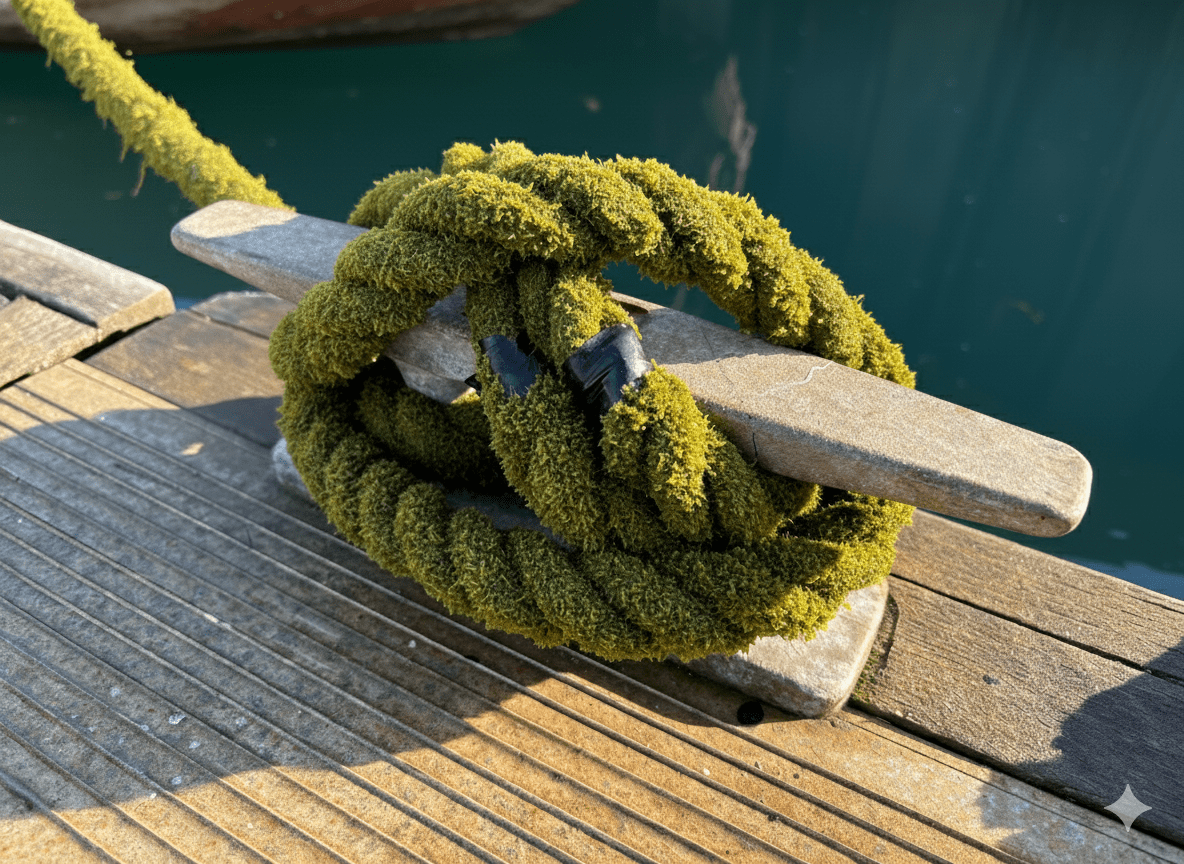
When you spot that unmistakable, vibrant green hue creeping across what should be a clean, tightly braided rope, a fuzzy blanket of algae and moss clinging stubbornly to the fibres, you know the truth has been revealed. These neglected lines are the irrefutable, biological evidence that your beloved vessel has been spending far more time docked than sailing. They are the silent testimony to skipped seasons, postponed adventures. And the long, slow decline that often ends at our yard here at Boatbreakers.
The Mossy Meter of Neglect
In the marine world, cleanliness often correlates with activity. A well-used boat has lines that are handled, washed by seawater, and kept relatively free of heavy organic growth. A pristine rope is a sign of a boat that has seen action recently. Or maybe even new ropes purchased ready for use.
Conversely, mossy mooring lines are the most visual metric of long-term inactivity. They indicate that the boat hasn’t just been moored for a week or two; it’s been static for seasons. Nature, ever the opportunist, has taken hold, using the nylon or polyester fibres as an anchor point for its own slow-growing ecosystem. This green blanket doesn’t just look bad; it’s a symptom of deeper issues that start the moment a boat is left untouched for too long.
Water Trapping: The organic growth holds moisture against the rope. Creating a constantly damp environment that accelerates fibre degradation. Increased Friction: Stiff, moss-caked lines become abrasive and harder to handle, increasing wear on cleats. And making them a literal pain to use when you finally do decide to untie. Compromised Strength: Over extended periods, the constant dampness and breakdown of materials can compromise the line’s load-bearing integrity.A crucial safety concern when the wind whips up.
From Neglect to Disposal
At Boatbreakers, we see the mossy mooring line scenario play out daily. It starts with the rope, then moves to a hull thick with marine growth. Next a battery dead beyond recovery, and eventually, systems like engines, electronics, and plumbing become seized by rust and neglect.
The decision to scrap a boat is rarely sudden. It’s a slow-burn realisation fuelled by mounting costs and diminishing returns. The moss on the ropes is the first financial alarm bell. It means that the cost of simply maintaining the boat is now compounded by the cost of reversing the damage from months or years of inaction.
When the cost of cleaning the hull, un-seizing the engine, replacing the rotten sails, and overhauling the lines exceeds the boat’s market value, the path forward becomes clear.
What’s the Algae Telling You?
So, take a look at your mooring lines. If they’re looking a little too verdant, don’t just reach for the bleach. Let it serve as a wake-up call. Either you get your boat back out on the water. Or you accept the truth the algae is telling you. Perhaps it’s time to call the experts and let Boatbreakers handle the next, final journey for your once-loved vessel. Fill in our Scrap your boat form and we can work out a price for you.